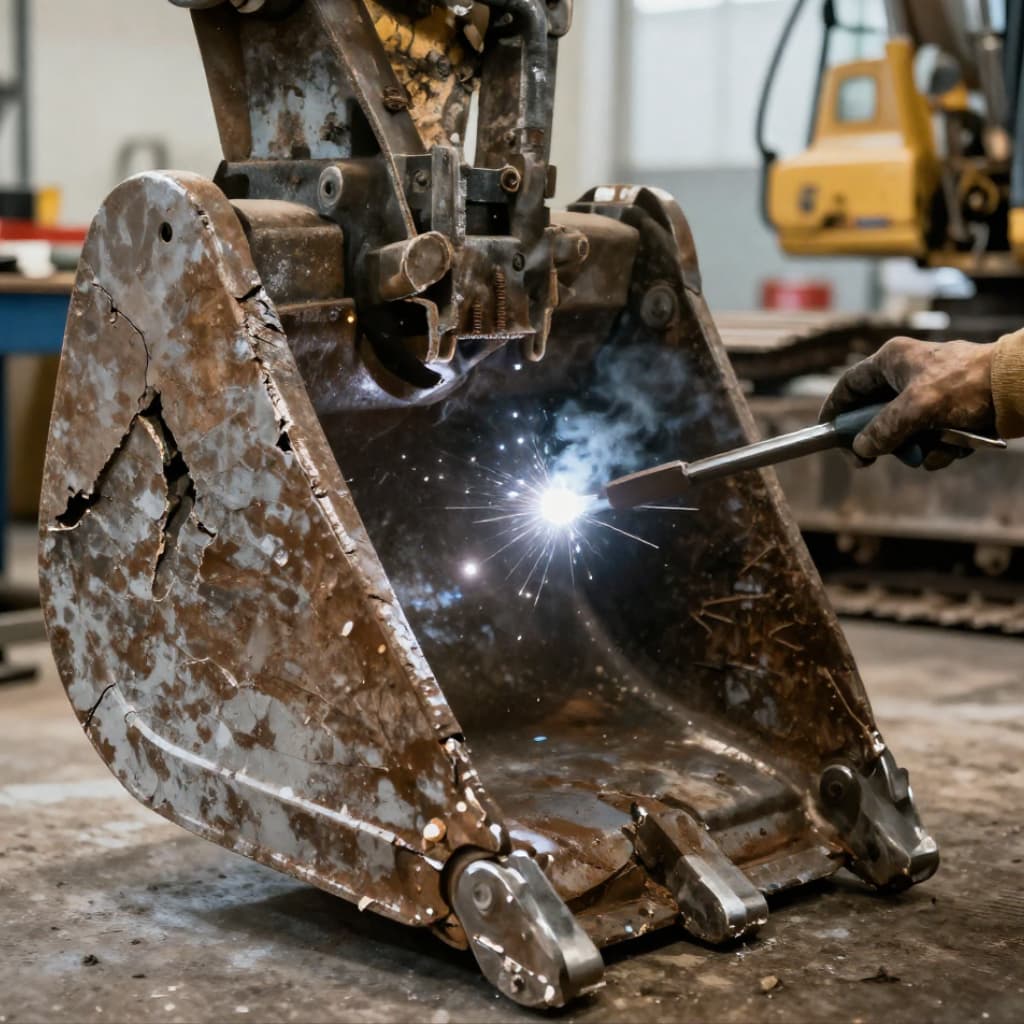

Excavator buckets are among the equipment that works under the most load and wears out the fastest in the field. Especially the cutting edge and tooth structure are critical points that directly determine performance. A repair not done on time or an incorrectly applied replacement not only damages the equipment; it also increases fuel consumption, reduces work efficiency, and raises costs.
Therefore, bucket repair and cutting edge replacement should be handled not as a "simple maintenance job" but as a technical process that needs to be properly planned.
How Is Bucket Wear Understood?
Wear on a bucket working in the field is often noticeable by eye. However, there are some signs that are quite important for early intervention:
- Difficulty entering the material
- Need for more power
- Teeth losing their sharpness
- Thinning and waviness in the cutting edge
- Cracks or deformation in the bucket
When these signs are observed, intervention should not be delayed. Because delay leads to larger and more costly damage.
Why Is the Cutting Edge So Important?
The cutting edge is the most critical part of the bucket that first contacts the ground and carries the load. When it is in the right condition:
- It enters the material more easily
- The machine strains less
- Fuel consumption decreases
However, a worn blade:
- Increases digging resistance
- Causes the operator to apply more force
- Strains the entire system
This means both performance loss and increased cost.
Things to Consider When Replacing the Cutting Edge
When replacing the cutting edge, it is not enough to simply remove the old part and install a new one. The process must be managed correctly.
1. Correct Material Selection
Wear-resistant steels with high hardness values should be preferred. Poor-quality materials wear out again in a short time.
2. Appropriate Thickness and Dimensions
Dimensions unsuitable for the bucket:
- Unbalanced load distribution
- Strain at welding points
- Early deformation
can cause.
3. Correct Welding Application
The welding process is the most critical stage. Incorrect welding:
- Crack formation
- Detachment of the blade
- Structural weakness
can cause. Therefore, appropriate electrode and welding technique should be used.
4. Thermal Control (Preheating / Cooling)
Especially in hard steels:
- Preheating should be done
- Sudden cooling should be prevented
Otherwise, the microstructure deteriorates and the risk of cracking increases.
Critical Points in Bucket Repair
Bucket repair is not limited to the cutting edge only. The overall structure should also be checked.
- Wear on the side walls
- Thinning on the bottom floor
- Play at connection points
- Loosening in tooth adapters
These areas should be checked regularly.
During repair:
- Not only the damaged area but also its surroundings should be reinforced
- Armoring should be done if necessary
- The original form should be preserved
Otherwise, bucket performance decreases.
The Consequences of Wrong Applications
The mistakes frequently made in the field are:
- Use of poor-quality steel
- Random welding process
- Adding thicker material than necessary
- Repairing only the broken area
These mistakes:
- Increase fuel consumption
- Put extra load on the machine
- Shorten the repair interval (recurring failure)
In other words, although it seems like a "cheap solution" in the short term, it costs more in the long term.
The Advantages Provided by Correct Maintenance
Thanks to regular maintenance and correct applications:
- Bucket life is extended
- Fuel consumption decreases
- Work time is shortened
- Operator comfort increases
This is directly reflected in work efficiency.
Conclusion
The excavator bucket is the heart of field performance. Especially the cutting edge is one of the most critical elements determining this performance.
With the right material, right welding, and right maintenance:
- Less fuel is consumed
- Faster digging is done
- Fewer breakdowns occur
Therefore, bucket repair and cutting edge replacement should be seen as a strategic maintenance process that should not be neglected.


 EN
EN  TR
TR