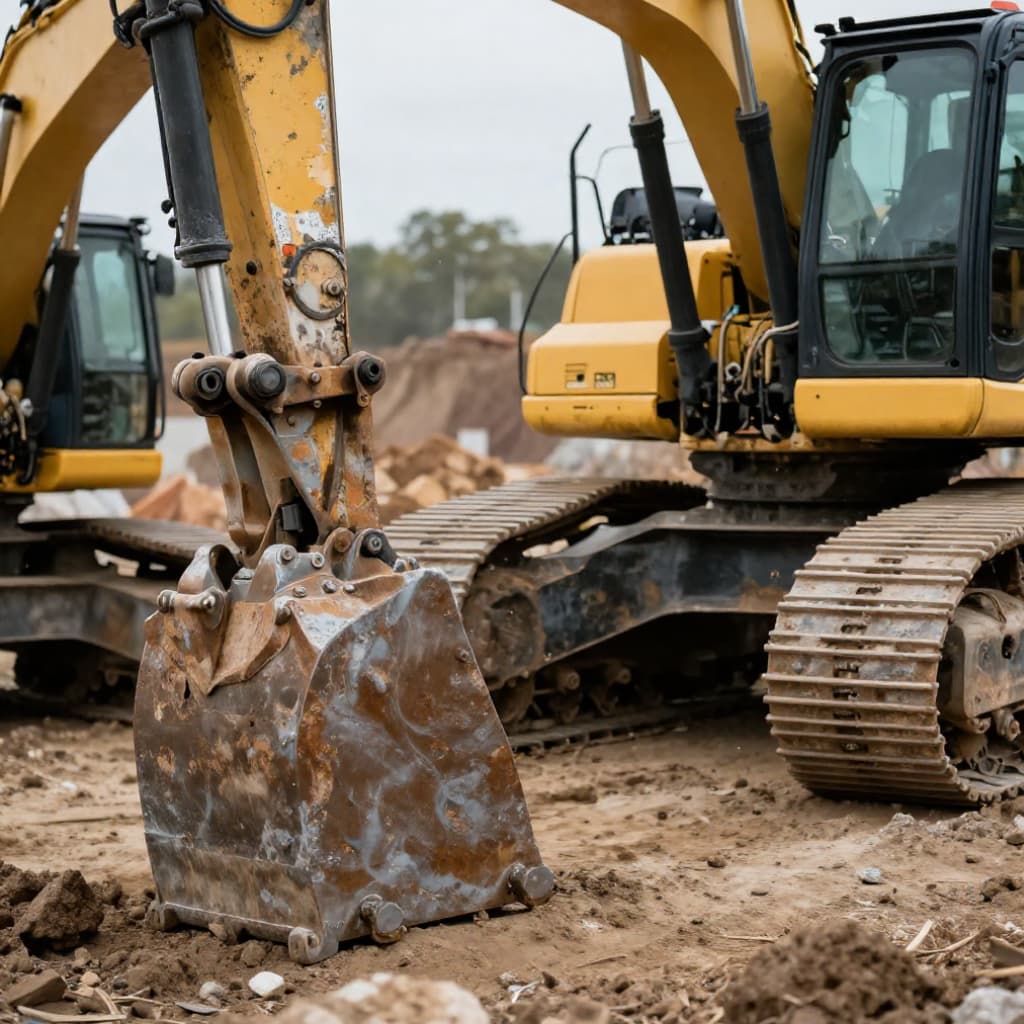

It is already known that fuel is one of the largest expense items when construction machinery works in the field. However, there is often an overlooked detail: the condition of the equipment used. Especially, it may not be noticed that armoring applications on buckets and scoops directly affect not only durability but also fuel consumption.
In fact, when the subject is examined a little more deeply, it becomes clear that armoring is not only a protection method but also a serious efficiency tool. So how is this possible?
What Is Armoring and Why Is It Done?
Buckets and scoops constantly work in contact with abrasive materials. Soil, stone, ore, and hard surfaces wear the equipment's surface over time. This is where armoring comes into play.
Armoring is the process of reinforcing equipment using wear-resistant special steel plates (high-strength materials such as Hardox). Thanks to this:
- The wear time is delayed
- Equipment life is extended
- Performance loss is minimized
But the really critical point begins here: when performance is maintained, fuel consumption is also affected.
How Does Wear Increase Fuel Consumption?
At first glance, one might not think about what a worn scoop has to do with fuel. But in the field, things go differently.
A bucket that wears over time:
- Loses its sharpness
- Enters the material with more difficulty
- Requires more power
In this case, the operator gives more throttle to do the same job. The machine strains more. The result?
👉 More fuel consumption
In other words, wear is actually an invisible fuel enemy.
The Effect of Armoring on Fuel Savings
An armored bucket or scoop maintains its form and sharpness for a long time. This directly affects working efficiency.
One should think of it this way:
- Entry into the material becomes easier
- Less resistance occurs
- Less engine power is required
When this triple effect combines, the machine does the same job with less effort. Less effort = less fuel.
Field observations have shown that correct armoring applications provide fuel savings of up to 10%. This ratio creates a significant cost advantage, especially in heavily working machines.
What Happens If Armoring Is Not Done Correctly?
There is another important detail here: not every armoring is correct.
Incorrectly done armoring:
- Creates unnecessary weight
- Disrupts the machine's balance
- Can increase fuel consumption
In other words, the goal is not just to "add thick steel." Armoring should be done at the right points, with the right material, and with the right engineering approach.
The Relationship Between Armoring and Work Efficiency
Fuel savings should actually not be evaluated alone. Because armoring also affects work time.
A more efficiently working scoop:
- Loads faster
- Requires fewer repeated movements
- Reduces operator fatigue
This indirectly:
👉 Less working time
👉 Less fuel consumption
means.
Long-Term Cost Advantage
Although armoring seems like a cost at first, it provides significant savings in the long term.
The gains can be summarized as follows:
- Less fuel consumption
- Less maintenance need
- Longer equipment life
- Less work loss
Especially in large construction and mining sites, this difference reaches significant figures on a monthly and annual basis.
Conclusion: The Invisible Savings Item
When it comes to construction machinery performance, engine power, brand, or operator experience is usually discussed. However, equipment quality often remains in the background.
But the truth is:
Armoring does not just protect the equipment.
It also reduces fuel consumption, speeds up work, and lowers costs.
Therefore, if sustainable efficiency is targeted in the field, correct armoring applications on buckets and scoops should now be seen not as a choice but as a necessity.

 EN
EN  TR
TR